2020. június 8., hétfő

2JP2 100 (39)

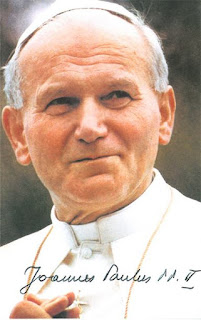
Pope Saint John Paul II. the Great
(Saint Karol Józef  Wojtyła)
/1920-2005/
Photo credit:

(HU) „Az összes ember igazi méltósága kéne a gazdasági tevékenység alapvető irányító elve legyen, mivel a gazdaság és a termelés az ember javát szolgálják és nem fordítva.”

(EN) The true dignity of every human person should be the basic ethical principle governing economic activity, since the economy and production are for the good of the human person and not vice versa.”

(12. 04. 1986. 04. 12.)

2JP2 100 (38)

Pope Saint John Paul II. the Great
(Saint Karol Józef  Wojtyła)
/1920-2005/
Photo credit:

His Holiness Pope John Paul II was a man I held in high regard. He was a determined and deeply spiritual minded person for whom I had great respect and admiration. His experience in Poland, then a communist country, and my own difficulties with communists, gave us an immediate common ground. The first time we met, he struck me as very practical and open, with a broad appreciation of global problems. I have no doubt that he was a great spiritual leader.
Right from the beginning a close personal friendship developed between us, which was confirmed on several subsequent occasions. I found we were in complete agreement about several issues. The Pope felt as I do that as human beings we not only require material development but we also need spirituality. Certainly, improved material facilities provide us with physical comfort but we also have unique intelligence or mind that mere material provision cannot fully satisfy. Both in public and to me in person the Pope always stressed the importance of spiritual values and we shared a concern that the younger generation is losing interest in them.
We were also in complete agreement about the need to promote harmony amongst different religious traditions. I was privileged to participate in the inter-faith meeting held at Assisi, a very important and significant event, at his invitation. It demonstrated to the world community that our different traditions really could pray together and send a message of peace from one platform.
I also have deep appreciation for the Pope's mission to bring peace to the world. In spite of increasing age and declining physical health, his relentless efforts to visit different parts of the world and meet the people who lived there to promote harmony and spiritual values, exemplified not only his deep concern but also the courage he brought to fulfilling it.
The Pope was very sympathetic to the Tibetan problem. Of course, as the head of an institution trying to establish good relations with China and seriously concerned about the status of millions of Christians in China he could not express this publicly or officially. But right from the start of our friendship he revealed to me privately that he had a clear understanding of the Tibetan problem because of his own experience of communism in Poland. This gave me great personal encouragement.
Finally, I want to express my deep admiration for the Pope's ability to forgive even his would-be-assassin. This was a clear indication that he was a true spiritual practitioner.

(Dalai Lama mourns John Paul II, "a true spiritual practitioner". Asianews.it. 04. 03. 2005. [https://cutt.ly/KyMoSOr])

2020. június 7., vasárnap

2JP2 100 (37)

Pope Saint John Paul II. the Great
(Saint Karol Józef  Wojtyła)
/1920-2005/
Photo credit:

(HU) „Azért imádkozunk [...], hogy mi emberek nemcsak békében, hanem harmonikusan tudjunk együtt élni, és meg tudjuk valósítani a szeretet civilizációját.”

(IT) „è la preghiera per una convivenza non solamente pacifica ma anche armoniosa, che costituisca una vera comunità dell’amore, civiltà dell’amore.

(Pécs-Pogány nemzetközi reptér/International Airport, 17. 08. 1991. 08. 17.)

A szentmise/La santa mesa: Az idézet/la citazione: 2:40:03-2:40:24.

2020. június 5., péntek

2JP2 100 (36)

 Pope Saint John Paul II. the Great
(Saint Karol Józef  Wojtyła)
/1920-2005/
Photo credit:

(HU) „Kedves Testvérek! Tekintsetek bizalommal a jövőbe. Egyesek pesszimista jóslatai miatt ne csüggedjetek el, és a mások által emelt akadályok ne állítsanak meg benneteket. Isten segítségével és azzal, hogy elkötelezitek magatokat, felülkerekedtek a nehézségeken és eljuttok a kitűzött célokhoz. Az a feladat vár rátok, hogy »korábbi életmódotokkal ellentétben levessétek a régi embert« és »öltsétek magatokra az új embert, aki az Istenhez hasonlóvá alkotott, megigazult és valóban szent teremtmény« [vö. Ef. 4, 22‒24]. A kereszténység állandó programja ez: megújulni lélekben és érzületben, és felöltem az új embert, aki Krisztusban, a feltámadott Úrban él.”

(IT) „Cari Fratelli e Sorelle, guardate con fiducia al vostro futuro! Le previsioni pessimistiche di alcuni non vi scoraggino, gli ostacoli frapposti da altri non vi frenino. Con l’aiuto di Dio e con l’impegno vostro le difficoltà saranno superate e gli obiettivi proposti raggiunti. A voi il compito di »deporre l’uomo vecchio con la condotta di prima«, per »rivestire l’uomo nuovo, creato secondo Dio nella giustizia e nella santità vera« [cf. Ef 4, 22-24]. Ecco l’incessante programma del cristianesimo: rinnovarsi nello spirito e nella mente rivestendo l’uomo nuovo che vive di Cristo, il Signore risorto.”

(Győr, 07. 09. 1996. 09. 07.)

2JP2 100 (35)

 Pope Saint John Paul II. the Great
(Saint Karol Józef  Wojtyła)
/1920-2005/
Photo credit:

(HU) „Ragyogó példaképeitek vannak, rájuk tekintsetek, amikor felhők tornyosulnak. Az elmúlt negyven évben főként a vértanúk és a hitvallók tettek tanúságot Krisztus világosságáról. Gondolok Apor Vilmos püspökre, aki ebben a városban áldozta fel életét a rábízottakért; gondolok Mindszenty József bíborosra, aki rendületlenül szembeszegült a diktatúrával, vállalva ezzel a hosszú keresztutat; gondolok a szegények orvosára, Batthyány Strattman Lászlóra, a szeretetszolgálat igazi hősére; gondolok a papokra, a szerzetesekre, a szerzetesnőkre és a sok világi keresztényre, akik életüket odaadták Jézusért. Tisztelettel emlékezzünk mindazokra, akik az elmúlt évtizedekben üldöztetést szenvedtek, de nem tagadták meg hitüket.”

(IT) „Avete esempi luminosi a cui guardare anche quando s’addensano le nubi. Soprattutto i martiri e i testimoni della fede degli ultimi quarant’anni rendono testimonianza alla luce di Cristo. Penso al Vescovo Vilmos Apor, che in questa città ha offerto la sua vita per coloro che gli erano stati affidati; penso al Card. József Mindszenty e alla strenua resistenza che egli oppose alla dittatura con la conseguente lunga “via crucis” che dovette percorrere; penso al medico dei poveri, László Batthyány Strattman, vero eroe della carità; penso ai sacerdoti, alle religiose ed ai religiosi, come pure a tanti laici cristiani che hanno donato la vita per Gesù. Rendiamo omaggio a tutti coloro che, nei decenni passati, hanno sopportato persecuzioni pur di non rinnegare la fede!

(Győr, 07. 09. 1996. 09. 07.)

2020. június 3., szerda

2JP2 100 (34)

 Pope Saint John Paul II. the Great
(Saint Karol Józef  Wojtyła)
/1920-2005/
Photo credit:

(HU) „Az idős ember is igen értékes a család és a társadalom számára. Ti, idősek, értékekben és tapasztalatokban igen gazdag örökség letéteményesei vagytok. Ezeket ne tartsátok meg magatoknak, hanem bölcsen és tapintatosan adjátok át a fiatalabbaknak, és ők hálásak lesznek érte.”

(IT) „Anche l’anziano costituisce una presenza assai preziosa per la famiglia e per la società. Voi anziani siete i custodi di un patrimonio ricchissimo di valori e di esperienze. Non tenetelo chiuso in voi stessi, ma comunicatelo ai più giovani, con saggezza e discrezione, ed essi stessi ve ne saranno grati.”

(EN) “The older person is valuable for both family and society. You, elderly, are the custodians of a rather rich heritage of values and experiences. Do not keep this only for yourselves, rather wisely and discreetly passed it down to the youngsters and they will be thankful for it.”

(DE) „Die alte Person ist wertvoll für die Familie und die Gesellschaft. Ihr, die Alten, sei die Wächter einen, von wert- und erfahrungsreiche Erbe. Behaltet dieses nicht nur für euch, sondern gibt es klugerweise und diskret an die Jugendlichen und sie werden dafür dankbar sein.”

(Pannonhalma, 06. 09. 1996. 09. 06.)

2020. június 2., kedd

2JP2 100 (33)

 Pope Saint John Paul II. the Great
(Saint Karol Józef  Wojtyła)
/1920-2005/
Photo credit:

(HU) 1979. június 2-a és 11-e között a frissen megválasztott lengyel pápa, II. János Pál hazalátogatott szülőhazájába. Varsóban a Győzelem (ma Piłsudski) téren mutatott be kb. 1,5‒2 millió résztvevő előtt szentmisét, továbbá ellátogatott az egyedüli magyar alapítású katolikus szerzetesrend, a pálosok kegyhelyére, Jasna Gorá-ba (Częstochowa), az auschwitz-i (Oświęcim) haláltáborba, a lengyel uralkodók volt koronázó városába, Gniezno-ba, valamint Krakkó kommunista rendszer által épített Nowa Huta nevű lakótelepére. Az ország lakosságának kb. egyharmada személyesen látta. A pápalátogatás jelentősen gyengítette a lengyel kommunista rezsim belföldi pozícióit.

Szentmise a varsói Győzelem téren kb. másfélmillió résztvevő előtt. (1979. június 2.)
Holy mass at Victory Square, Warsaw  in front of ca. 1.5 million participants. (June 2, 1979)
Heilige Messe am Sigesplatz, Warschau mit 1.5 Millionen Teilnehmer. (2-ten Juni 1979)
Sfânta mesă în Piața Victoriei, Varșovia în fața a un milion și jumătate de participanți. (2 iunie 1979)
Kép forrása/photo's source/Quelle des Photos/sursa fotografiei:
https://bit.ly/3eV5uXV

(EN) Between June 2 and 11, 1979 the newly elected Polish pope, John Paul II returned to his homeland. In Victory Square (today Piłsudski Square) in Warsaw, he celebrated holy mass in front of 1.5-2 million participants and visited the shrine of the Pauline order (the only Catholic order to be founded by a Hungarian), Jasna Gora (in Częstochowa), the death camp at Auschwitz (Oświęcim), Gniezno, the coronation site of Polish monarchs and the Communist-buildt Nowa Huta district of Kraków. About one third of the Polish population saw him in person. The papal visit was a strong blow to the  domestic positions of the Polish communist regime.

II. János Pál pápa Częstochowá-ban. (1979. június 6.)
Pope John Paul II in Częstochowa. (June 6, 1979)
Papst Johannes Paulus II in Częstochowa. (6-ten Juni 1979)
Papa Ioan Paul al II-lea în Częstochowa. (6 iunie 1979)
Kép forrása/photo's source/Quelle des Photos/sursa fotografiei:
https://bit.ly/2TVwvlL

(DE) Zwischen den 2-ten und 11-ten Juni 1979 kehrte der neu ausgewählte Papst, Johannes Paulus II. in seinem Heimatland zurück. Am Siegesplatz (heute Marschall-Józef-Piłsudski-Platz) in Warschau feierte er die heilige Messe mit 1,5-2 Millionen Teilnehmer. Außerdem besuchte er den Heiligenschrein des Pauliner Ordens (der einzige ungarisch gegründete katolische Orden) von Jasna Gora (in Częstochowa), den Vernichtungslager in Auschwitz (Oświęcim), den ehemaligen Krönungsort der polnischen Monarchen in Gniezno und den Kommunisten gebauten Bezirk Nowa Huta in Krakau. Etwa ein Drittel der Population sah ihn persönlich. Der Papstbesuch war ein heftiger Schlag auf die Positionen des kommunistischen Regimes in Polen.

In/în Oświęcim-ben (PL):


(RO) Între 2 și 11 iunie 1979 suveranul pontif proaspăt ales de origine poloneză, Ioan Paul al II-lea s-a întors în țara natală. Papa a celebrat sfânta liturghie în Piața Victoriei (azi Piłsudski) din Varșovia în fața a 1,5-2 milioane de participanți. Totadată a vizitat locul de pelerinaj din Jasna Gora (în Częstochowa) a ordinului paulin, singurul ordin religios catolic înființat de un maghiar, lagărul de exterminare de la Auschwitz (Oświęcim), fostul loc de coronare a monarhilor polonezi de la Gniezno și districtul Nowa Huta din Cracovia, construit de comuniști. Circa o treime din populația țării l-a văzut în persoană. Vizita papală a fost o lovitură puternică pentru pozițile interne ale regimul comunist polonez.

Stefan Wyszyński bíboros és II. János Pál pápa Krakkóban. (1979. június 10.)
Cardinal Stefan Wyszyński and Pope John Paul II in Kraków. (June 10, 1979)
Kardinal Stefan Wyszyński und Past Johannes Paul II in Krakau. (10-ten Juni 1979)
Cardinalul Stefan Wyszyński și papa Ioan Paul al II-lea în Cracovia. (10 iunie 1979)
Kép forrása/photo's source/Quelle des Photos/sursa fotografiei:
https://bit.ly/2XonnrX